
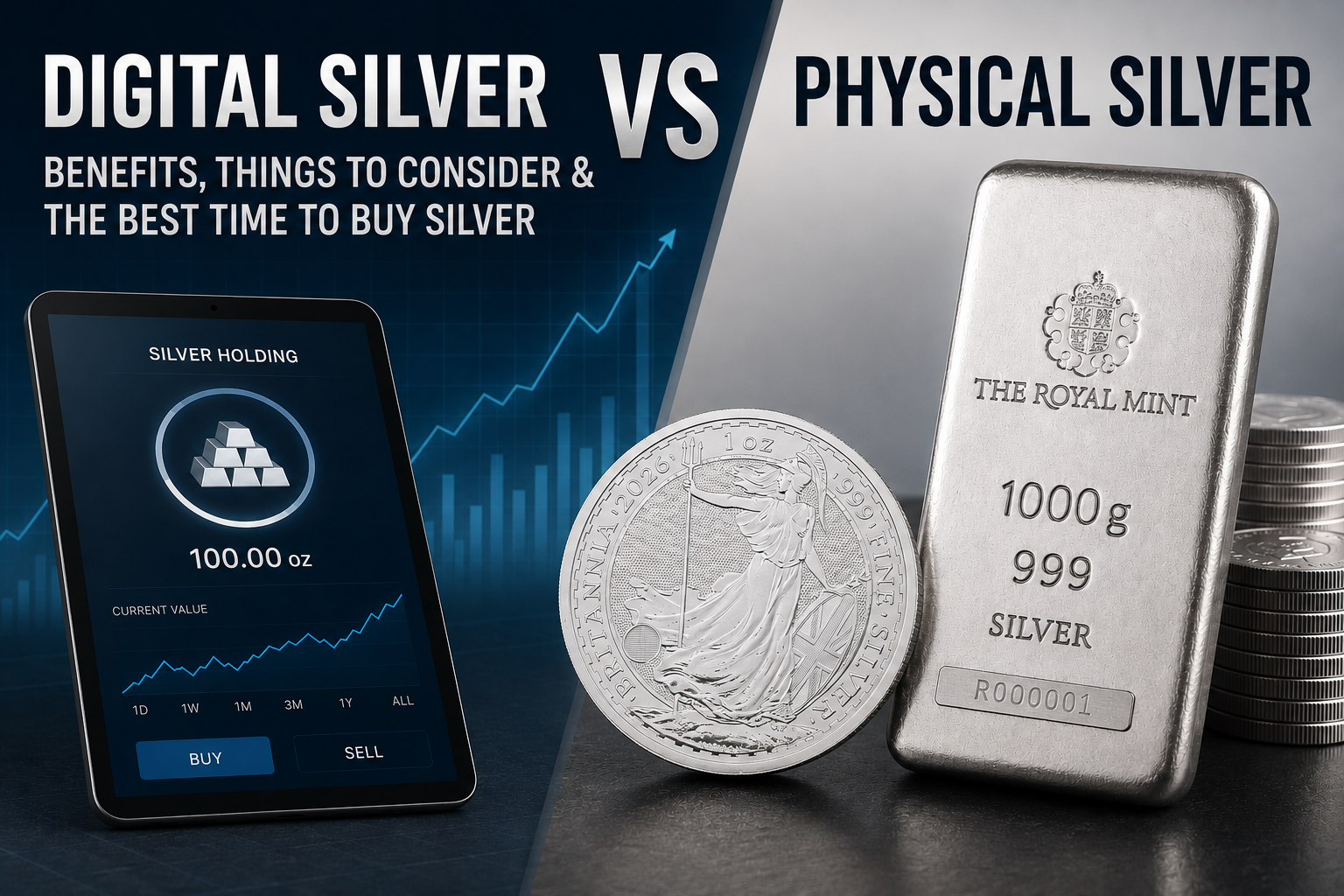
Digital Silver vs Physical Silver: Benefits, Things to Consider & When Is the Best Time to Buy Silver?
Silver has long been viewed as both a precious metal and an industrial commodity, making it a unique investment option. Whether you're considering digital silver or physical silver bullion, understanding the differences can help you make an informed decision based on your own circumstances.
Disclaimer: This article is for general information only and does not constitute financial, investment or tax advice. Always carry out your own research and seek independent professional advice where appropriate.
What Is Digital Silver?
Digital silver allows investors to buy ownership of silver electronically without taking physical possession. Depending on the provider, the silver may be fully allocated and stored in secure vaults on your behalf.
Benefits of Digital Silver
-
VAT-free in many UK investment structures, as no physical silver is delivered to the investor.
-
Lower entry point, allowing purchases from relatively small amounts.
-
No need to arrange secure storage or insurance yourself.
-
Easy to buy, sell and manage online.
-
Typically offers tighter buy/sell spreads than small physical silver products.
Things to Consider
-
You do not have immediate physical possession of the metal.
-
Depending on the provider, storage, vaulting or administration fees may apply to cover the secure storage, insurance and management of the physical silver backing your digital holding.
-
Not all digital silver providers operate in the same way. Some offer fully allocated silver held specifically for individual clients, while others may use pooled or unallocated structures. It is important to understand how your chosen provider stores and records ownership.
Allocated vs Unallocated Digital Silver
When investing in digital silver, it is important to understand how your silver is held.
Allocated silver means specific quantities of physical silver are held on your behalf and recorded as your property. The silver is typically stored in a secure vault and remains separate from the provider's own assets.
Unallocated silver usually represents a claim against a provider for a quantity of silver, rather than ownership of specifically identified bars. While this can offer lower costs and greater flexibility, it may involve additional counterparty risk because the silver is not individually allocated to each investor.
Before investing, it is worth checking whether a provider offers allocated or unallocated silver, how the metal is stored, whether it is independently audited, and what happens if you choose to sell or take delivery.
What Is Physical Silver?
Physical silver includes coins, bullion bars and rounds that you can store yourself or in a professional vault.
Benefits of Physical Silver
-
You own tangible silver that you can hold yourself.
-
No dependence on a digital platform for ownership.
-
Suitable for investors who value direct possession of their assets.
-
A wide range of sizes is available to suit different budgets.
Things to Consider
-
New physical silver purchased in the UK is generally subject to VAT, increasing the purchase cost. However, second-hand silver may be available under the Margin Scheme, where VAT is not charged on the full selling price, potentially reducing the overall cost to buyers.
-
Secure storage and insurance should be considered.
-
Buying and selling physical bullion may involve wider spreads than digital products.
-
Smaller products generally carry higher manufacturing, minting and distribution costs, meaning they often attract higher premiums over the silver spot price than larger bars.
Capital Gains Tax (CGT) on Silver
Tax treatment can vary depending on the type of silver you purchase.
UK Legal Tender Silver
Certain UK legal tender silver bullion coins, such as Britannias, are typically exempt from Capital Gains Tax (CGT) for UK individuals because they are recognised as UK legal tender. This can make them an attractive option for investors who may be concerned about future capital gains.
Silver Coins That Are Not UK Legal Tender
Silver coins that are not UK legal tender, silver bars and many other silver products are not normally exempt from Capital Gains Tax (CGT). Any gains may be subject to CGT depending on your personal circumstances and current tax legislation.
As tax legislation can change, investors should always check the latest HMRC guidance or seek professional advice.
Understanding Silver Premiums
One of the biggest differences between digital and physical silver is the premium paid above the underlying spot price.
Premiums cover:
-
Refining
-
Manufacturing
-
Minting
-
Packaging
-
Distribution
-
Dealer costs
Generally:
-
1 oz silver coins usually have the highest premiums.
-
10 oz and 1 kg bars typically offer better value per ounce.
-
Large investment bars, such as 5 kg, 10 kg, 15 kg and approximately 1,000 troy ounce (around 31 kg) Good Delivery bars, generally carry the lowest premium per ounce because manufacturing and distribution costs are spread across much larger quantities. These bars are commonly used by institutional investors, manufacturers and professional vaulting services rather than private investors.
While larger bars often offer better value per ounce, they require a greater upfront investment and may be less flexible if you only wish to sell part of your holding in the future.
Digital Silver vs Physical Silver: Key Differences
| Feature | Digital Silver | Physical Silver |
|---|---|---|
| Ownership | Digital ownership of vaulted silver | Direct ownership of bullion |
| Storage | Provider manages storage | Self-storage or professional vault |
| VAT | Often VAT-free within UK digital investment structures | New silver generally subject to VAT; some second-hand products may reduce the VAT impact |
| Capital Gains Tax | Depends on the investment structure | UK legal tender bullion coins may be CGT exempt; silver coins that are not UK legal tender and many silver bars are not |
| Accessibility | Buy and sell online | Physical delivery or collection required |
| Premiums | Usually lower | Vary by product size, with smaller products generally costing more per ounce |
When Is the Best Time to Buy Silver?
There is no perfect time to buy silver, but several economic factors can influence prices.
Economic Uncertainty
Silver often attracts increased investor interest during periods of:
-
High inflation
-
Recession concerns
-
Banking instability
-
Currency weakness
Many investors view precious metals as a way to diversify portfolios during uncertain economic conditions.
Geopolitical Tensions
Wars, international conflicts and geopolitical uncertainty can increase demand for precious metals as investors seek perceived safe-haven assets. However, prices can also be volatile and are influenced by many other global factors.
Industrial Demand
Both silver and gold have important industrial applications. Gold is widely used in electronics, aerospace, telecommunications and medical devices because it is highly resistant to corrosion and an excellent conductor of electricity.
However, silver has significantly greater industrial demand, with around half of annual global silver consumption being used in manufacturing and industrial applications. Silver is widely used in:
-
Solar panels
-
Electric vehicles
-
Consumer electronics
-
Medical equipment
-
Semiconductors
-
Electrical contacts and batteries
As demand for renewable energy and advanced technologies grows, industrial consumption can have a significant influence on silver prices. Conversely, periods of slower global manufacturing may reduce industrial demand.
Supply and Mining
Silver prices can also be affected by:
-
Mine production
-
Recycling supply
-
Government stockpiles
-
Investment demand through ETFs and bullion markets
Because silver is influenced by both investment demand and industrial consumption, its price can often be more volatile than gold.
Avoid Buying Based on Hype
Precious metals often receive increased media attention during periods of economic uncertainty, high inflation or geopolitical conflict. While these events can influence prices, it is important to avoid making investment decisions based solely on headlines, social media commentary or market hype.
Prices can move sharply in both directions, and periods of heightened excitement are often accompanied by increased volatility. Taking time to research the market and understand your reasons for investing can help you make more considered decisions.
Consider Dollar Cost Averaging
Rather than investing a large amount all at once, many investors choose to buy silver regularly over time using a strategy known as Dollar Cost Averaging (DCA).
By making consistent purchases regardless of the current silver price, investors may reduce the impact of short-term market fluctuations and avoid trying to predict the perfect time to buy.
While Dollar Cost Averaging does not guarantee profits or protect against losses, it can help build a position gradually and reduce the risk of investing a large sum immediately before a market downturn.
Is Digital or Physical Silver Better?
The right choice depends on your objectives.
Digital silver may suit investors looking for convenience, lower dealing costs and VAT-efficient exposure to the silver price.
Physical silver may appeal to those who value tangible ownership and the ability to hold bullion directly, particularly where UK legal tender coins offer potential CGT advantages.
Many investors choose to hold a combination of both, balancing convenience with physical ownership.
Final Thoughts
Both digital silver and physical silver have distinct advantages. Understanding VAT, Capital Gains Tax, premiums and the wider economic factors affecting silver prices can help you make a more informed decision. Whether you prioritise convenience, tax efficiency or tangible ownership, it is important to research your options carefully and ensure they align with your own financial objectives.
Disclaimer: The information in this article is provided for general educational purposes only and should not be regarded as financial, investment, legal or tax advice. Investments can rise and fall in value, and past performance is not a reliable indicator of future results. Always conduct your own research and consult a qualified financial adviser or tax professional before making investment decisions.
Share:
Best Silver Bullion Coins: Britannia vs Maple Leaf vs Kangaroo
24ct Gold Flake Water: Luxury in Every Sip